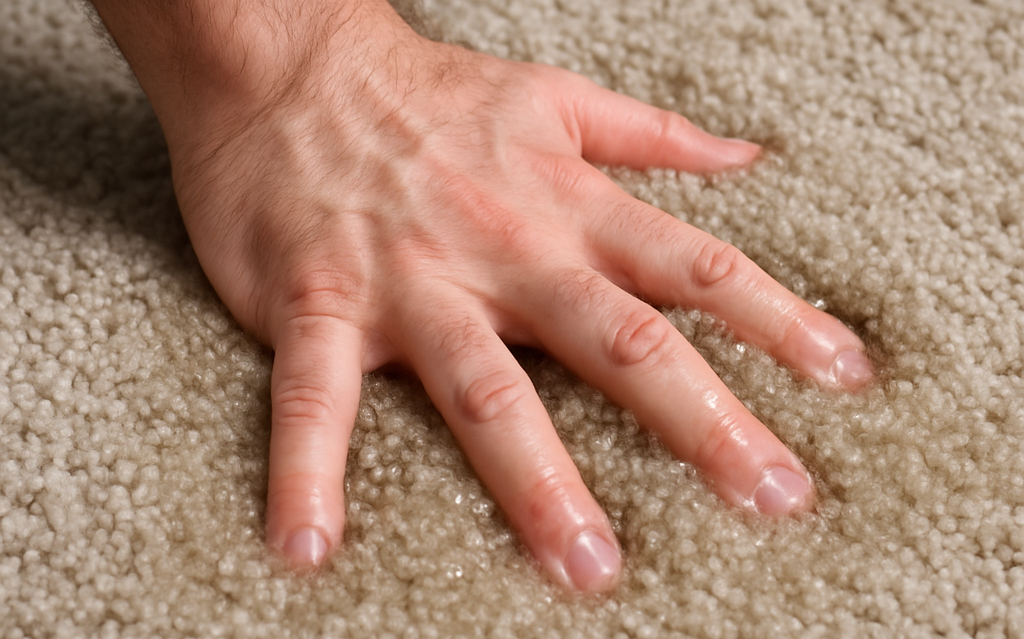
Imagine arriving home to discover that water is spreading over the kitchen floor from a burst pipe under the sink. This may seem like a simple mess to clean up, grab a few towels, mop up the water and move on with your day. But, if that water has seeped into the flooring, cabinets and drywall and it goes unnoticed for days it can cause long-term issues. This can lead to costly repair bills, health risks and even structural problems.
Industry professionals use standardized frameworks to classify water damage that were developed by the Institute of Inspection, Cleaning and Restoration Certification (IICRC). These frameworks categorize water damage by contamination level (Categories) and extent and evaporation potential (Classes). They determine the health and safety risks and how difficult it will be to dry the water damage areas.
In this article, we will examine the three categories based on sanitary risk and the four classes based on material saturation, evaporation load and drying complexity. We will look at scientific concepts like permanence, diffusion, porosity and capillary action in more detail. Ultimately, we hope that you will understand how varying types of water damage will influence drying strategies and how risks like microbial growth can escalate. This will highlight why rapid and informed action is essential to prevent a small water incident from spiralling into a major disaster for your home.
Categories of Water Damage: Based on Contamination Levels
The IICRC groups water damage into three categories based on the water source and the contamination levels. These categories will determine the potential health risk, required protective measures and the appropriate cleanup methods. It’s important to understand that water damage can escalate quickly and that even clean water will not stay clean indefinitely. When water is stagnant, bacteria multiplies due to temperature, moisture and the availability of nutrients. Chemical processes like hydrolysis where water breaks apart material bonds will contribute to deterioration and this will allow contaminants to spread in water damaged areas.
Comparison of Water Damage Categories
Category | Typical Sources | Primary Risks | Cleanup Needs |
| Category 1 | Burst pipes, supply line leaks, rain intrusion | Minimal initial risk | Drying and monitoring |
| Category 2 | Washing machine overflow, toilet (urine only), sink drains | Illness or discomfort | Prompt removal and disinfection |
| Category 3 | Sewage backups, flooding, standing contaminated water | Severe health hazards | Professional biohazard remediation |
Category 1: Clean Water
Category 1 or clean water originates from sources that contain no significant contaminants at the time of release, such as burst supply pipes, roof leaks, leaking water heaters or an overflowing bathtub.
There are no initial risks from skin contact, inhalation or ingestion, but there is still the risk of water damage. Any excess moisture can provide the growth medium for mold in 24-48 hours. Untreated Category 1 water can degrade into Category 2 as the bacteria colonizes the wet surfaces.
Category 1 water evaporates via simple diffusion, it has a low microbial load and the water molecules move from wet surfaces into the drier air. Materials like wood and drywall absorb water via capillary action to pull moisture deep into their porous structure. Gradually, this may weaken the material and support fungal growth.
Category 2: Gray Water
Category 2 or gray water contains some contamination, common sources, include: dishwasher and toilet overflows (urine only), washing machine wastewater and sink or showerage drainage. There may be microbes, food particles, soap residues and grease present. With ingestion illness or discomfort may occur and mold growth can be accelerated because organic matter is a nutrient source for microbes.
The presence of contaminants raises osmotic pressure, more water is drawn into building materials and this accelerates hydrolysis which breaks down adhesives and wood fibers. Evaporation will occur, but the residue may form biofilms which are thin and slimy microbial layers that trap moisture to slow drying. Gray water must be dealt with quickly, bacteria can reproduce via binary fissure and double every 20-30 minutes. Any delay will virtually guarantee an escalation to Category 3.
Category 3: Black Water
Category 3 or black water is hazardous, it comes from unsanitary sources, such as sewer backups, standing water that contains human or animal waste and storm or river flooding. It may contain bacteria, pesticides, viruses, toxic chemicals and heavy metals. The health risks are severe, they may include serious illness or death and the contaminants can penetrate deeply into materials which makes restoration dangerous and complex without the proper training and equipment.
Black water usually contains anaerobic bacteria which grows in low-oxygen environments and produces toxins as metabolic byproducts. These contaminants spread to materials according to the laws of diffusion where high concentration gradients drive pollutants deeply into floors, walls and furnishings.
The major risks are bacterial and viral infections, poisoning or chemical burns and respiratory issues from contaminated aerosols. Immediate professional intervention is essential, when black water evaporates volatile compounds are airborne and contamination spreads further.
Classes of Water Damage: Based on Extent and Evaporation Load
The three categories cover what may be in the water and the following four classes describe the volume of water present and how difficult it will be to dry. These classes estimate the evaporation load which is the volume of moisture that must be removed from the air and materials in a drying chamber. There are three factors that influence evaporation:
- Permeance: How easily the vapor can pass through material.
- Porosity: How easily the water can enter and exit a material.
- Surface area and saturation depth: With more wet area the humidity load is increased.
Evaporation follows the basic laws of thermodynamics: a wetter surface will release more vapor, this will increase the indoor humidity and stronger dehumidification will be required.
Comparison of Water Damage Classes
Class | Wet Area / Characteristics | Evaporation Rate | Drying Challenges |
| Class 1 | <5% of surfaces wet | Very low | Minimal equipment |
| Class 2 | 5–40% wet | Moderate | Wicking and absorption |
| Class 3 | >40% wet | High | Structural saturation |
| Class 4 | Low-permeance materials | Very slow | Specialty techniques |
Class 1: Minimal Wet Area
Class 1 is less than 5% of the total surface area becoming wet, it has the lowest evaporation load and it’s the easiest to manage. The limited surface area makes evaporation slow and minimal or no mechanical dehumidification is necessary.
The materials will contain little bound water which is moisture held inside the pores by molecular forces. Drying is typically natural diffusion as the kinetic energy transfers the water molecules into the surrounding air.
Class 2: Moderate Wet Area
Class 2 affects 5-40% of wet surfaces, like a lower portion of walls or an entire floor. With more material involvement the drying times and equipment needs are increased.
With a larger wet surface the partial water vapor pressure will speed evaporation. The porous materials can absorb and release moisture quickly following Raoult’s law for vapor mixtures. Wicking is the capillary rise of water up walls or through fabrics. To fully dry a Class 2 area, dehumidification will be required.
Class 3: Extensive Wet Area
Class 3 is more than 40% wet surfaces from saturated carpets, subfloors, walls, ceilings and insulation. This class has the greatest evaporation load, substantial drying equipment and close monitoring will be essential. The deep saturation will create strong internal humidity gradients. The moisture will move rapidly via diffusion and convections and materials may swell due to osmotic expansion which can weaken the structural integrity.
Class 4: Specialty Drying Situations
Class 4 is water that’s trapped in low-permeance materials, like hardwood, concrete, plaster, masonry and complex assemblies with multiple layers. The drying times are the longest and this is true even if the affected area is smaller. Specialized techniques may be required because low permeance materials trap water via hydrogen bonding. The removal of this moisture may require strong vapor pressure differentials that can take days or weeks.
Conclusion
Water damage can be understood through the two complementary frameworks covered earlier. The three categories describe the contamination and health risk from clean water up to mold potential and black water with severe hazard.
The four classes describe evaporation load and drying complexity from a minimal Class 1 event to a specialty Class 4 with materials that are deeply bound with moisture. When these types are understood, targeted responses to prevent further escalation, like managing evaporation, addressing bound water and stopping bacterial growth can be implemented.
Regular inspections to catch Category 1 damage at an earlier stage is recommended. With a Category 2 or 3 or Class 3 or 4 situation consult a IICRC certified professional. A moisture meter is handy for smaller DIY checks, but experts should be consulted for complete drying control measures. When you realize that water damage is more than a technical problem to solve, this is your initial line of defense against the expensive and long-term consequences of water damage.