As much as we would like to believe that the tags on our rugs, indicating the material type must be right, the reality is that they can be wrong. Recently we dealt with a situation where the tag was incorrectly labeled, causing our factory to use the wrong shampoo and thus ruining the rug. This was of course not our fault, but we took all the necessary and insider steps to get the customer a free new rug. Learn more below!
The Importance of the Rug Material Tag
Most rugs have a tag, unless they are handmade and bought on the street in one of these popular rug-making countries like Turkey, Morocco, or Iran. This tag is located on the back of the rug under one of the corners. It often states the origin of the rug and the material composition. Material compositions can be either a single material or a blend. It is essential for cleaners to read the tag as the material dictates how the cleaning should be performed. Especially today with advanced technologies, rug making factories are using complex fibers of a variety of materials, some of which cannot even tolerate water like viscose.
Case Study: When Cleaning a Viscose Rug Went Wrong
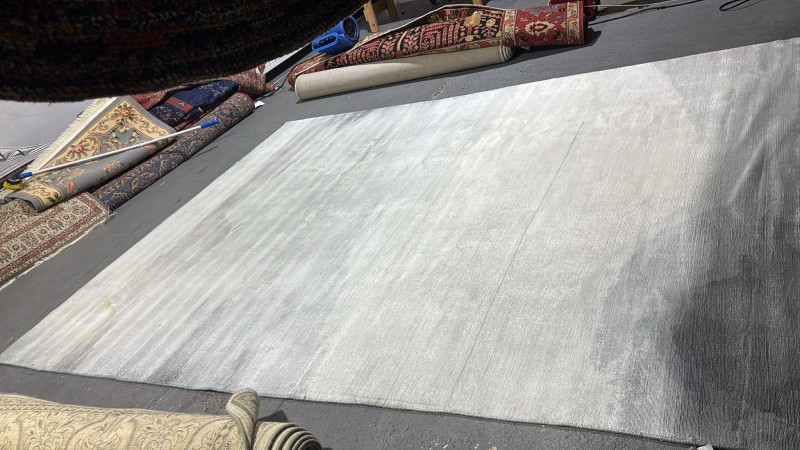
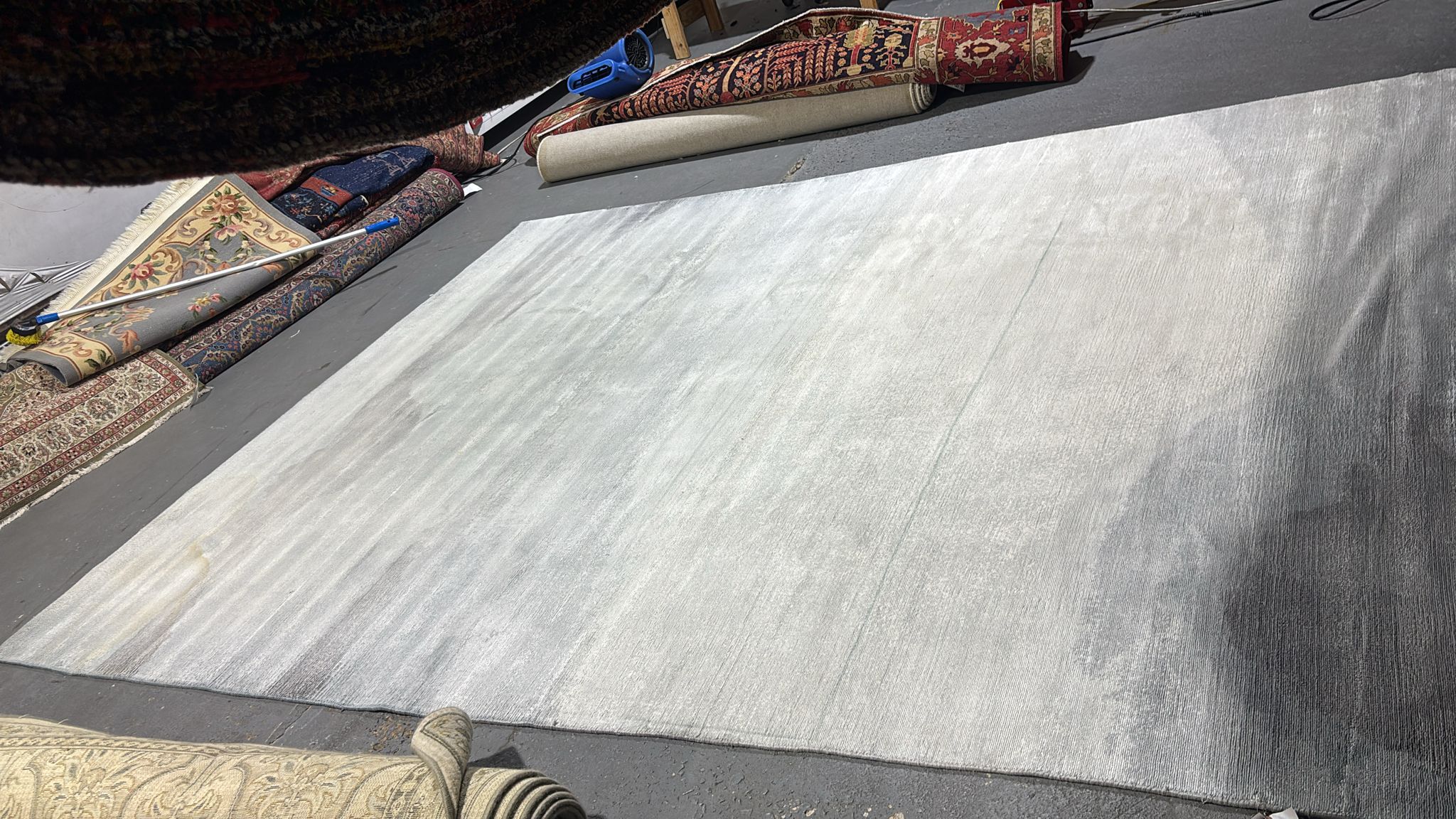
In this particular situation, we got a rug from a customer who bought it at a well-known online furniture supplier. The rug’s tag stated it was viscose. We cleaned the rug according to this material and we found the result was shocking. All the color had just disappeared from the rug, vanished. The blues and the grey accents of the rug were now just faintly colored. This of course was a big problem, but since we clean thousands of viscose rugs a year, we knew our process was perfect and that the issue was with the rug, not the shampoo.
Our Investigation: Uncovering the Mislabeled Fiber
Our first step was to find the rug online which stated it was 100% viscose. We then found different versions of the same rug, with different colors and discovered that the store labeled them as Tencel. Seems odd that the same rug, with different colors would be made of a different material. This was the clue that our rug was mislabeled.
We called the store, and pretended we were a designer looking to buy the rug. We didn’t want to say up front that they probably mislabeled the rug causing it to be ruined at cleaning because they might then not investigate the issue as they would know that they were on the hook for a new rug. We let the representative know that a similar rug was made of a different material but this one was viscose. We insisted we needed to know because we also recommend cleaning to our clients and want to make sure a mishap (like the one that actually happened) is avoided. The representative took down my information and said she would investigate.
About a week later, the rep came back to us and said that it was indeed viscose. I asked if they had contacted the supplier in India, where the rug was made. She said they didn’t and I insisted they do that. A few days later we got a call from the store saying that in fact the rug was mislabeled and that it had been updated with the correct information online. Upon hearing this, we were so relieved but also proud of our oriental rug cleaning services in that we were truly experts and knew the issues before the facts actually emerged.
Mission Accomplished: Holding the Retailer Accountable
We then contacted the customer service on behalf of the client and had the store pick up the rug and refund the cost of the rug to the client. Mission accomplished, everyone happy.
Key Takeaways for Rug Cleaners and Consumers
What can we learn from this situation?
- Rug tags are not always accurate. As a professional cleaner, trust your senses and experience and don't clean a rug that seems like one material but labeled another. Do your due diligence before feeling confident about doing the proper cleaning.
- Push back on retailers if they make a mistake. Have them investigate (maybe make up a story like mine) and get to the bottom of the issue. Just because a rug gets ruined under the care of a carpet cleaner, doesn’t mean it's 100% his fault.
- Have retailers take accountability for their mistakes and give you a refund or replacement. Just don’t get a replacement for a viscose or Tencel rug because they are a massive hassle to clean.
- Get a reputable, professional, and experienced cleaner to do your oriental rug cleaning. If a newbie had this rug, he would most likely be footing the bill for a new rug, have his reputation damaged, and have a very angry client.
Remember, when cleaning oriental or expensive (>$3000), it's always best to have them cleaned in a facility with a controlled environment. Although it might be tempting to save a little cash on an in-home cleaning, having it done in a factory with the right care and shampoo can mean the difference between a ruined rug and one that is restored.